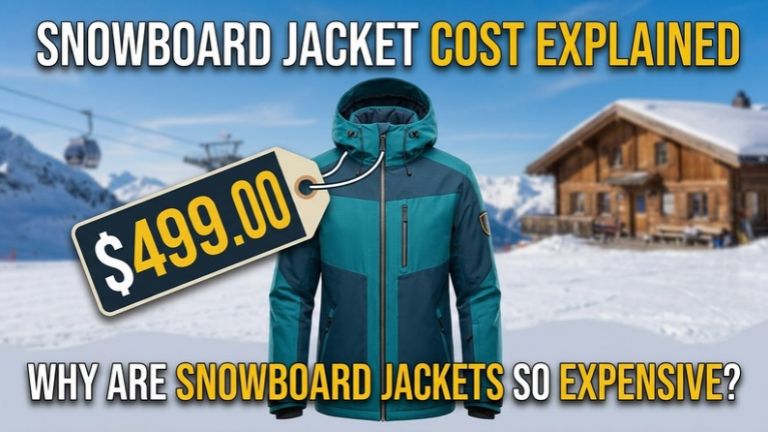
A good snowboard jacket can cost $400 or more. That is a lot for a coat. So why are snowboard jackets so expensive compared to a regular winter coat? The answer comes down to materials, construction, and testing. This guide shows where the money goes and whether the price is worth it.
Short Answer: Snowboard jackets are expensive because they are high-performance technical outerwear. They are built to survive extreme weather, constant friction, and heavy moisture.
Where the Money Goes: Premium pricing comes from three key factors:
- Advanced waterproof membranes: High-end waterproof and breathable membranes, such as GORE-TEX and Dermizax, involve licensing fees and patented technology.
- Complex manufacturing: Waterproof seam taping, water-resistant zippers, drop-tail tailoring, and articulated joints all add labor and cost.
- R&D and lab testing: Wind tunnel, hydrostatic head, and abrasion tests are expensive to run.
The Material Cost: Membranes, DWR, and Licensing
The fabric is the biggest cost driver. A snowboard jacket is not one layer. It is a stack of engineered materials that each do a job.
GORE-TEX and Proprietary Waterproof Tech
GORE-TEX is a licensed technology. Brands pay to use it, and they must meet strict quality checks before they can put the label on a jacket. Other membranes, such as Dermizax from Toray, are also patented. These fees and checks get built into the retail price.
You are paying for proven performance. A trusted membrane blocks water from outside while letting sweat vapor escape from inside.
Hydrostatic Head Ratings
Waterproofing is measured in millimeters of water pressure the fabric can hold. A basic jacket may be rated 10,000mm. A professional shell may reach 28,000mm to 30,000mm or more.
Higher ratings need better membranes, denser fabrics, and tighter quality control. The jump in material and production cost from a basic 10k jacket to a 30k+ shell is large, and it shows up on the price tag.
Eco-Friendly DWR Coatings
DWR stands for Durable Water Repellent. It is the coating that makes water bead off the outer fabric. Older DWR treatments used PFCs, which raised environmental concerns. Many brands have moved to PFC-free versions.
That shift took years of research and testing. The new coatings also cost more to produce and can need more care to keep working. Those costs add to the final price.
Advanced Technical Construction and Features
Even the best fabric fails if the jacket is built poorly. Construction is the second big cost.
Fully Taped Seams
Every stitch makes tiny needle holes. On a fully taped jacket, heat-sealed waterproof tape covers each seam. This is slow, careful work. It uses extra material and extra labor, which is why fully taped jackets cost more than critically taped ones.
YKK AquaGuard Zippers
Water-resistant zippers, such as YKK AquaGuard, use a polyurethane coating that sheds water. They cost more than standard zippers. Industry estimates range from roughly 2x to 8x the cost per meter, depending on the type. A technical jacket has a main zipper, pocket zippers, and vent zippers, so the extra cost adds up.
Note that YKK describes these zippers as water-resistant, not fully waterproof. They still make a real difference in wet snow.
Ergonomic and Articulated Cut
Cheap jackets use flat pattern cutting. Snowboard jackets use curved sleeves, shaped shoulders, and drop-tail hems that fit a riding posture. This tailoring needs more pattern pieces and more skilled sewing. It also needs more testing so the jacket moves well when you twist, bend, and reach.
Snow-Specific Features
Small parts add cost too. Common examples include:
- Integrated powder skirts
- Wrist gaiters
- Mesh-lined pit zips
- RECCO reflectors for avalanche rescue
Each feature needs extra fabric, hardware, and sewing time.
Cheap vs. Mid-Range vs. Premium Snowboard Jackets
Price usually reflects real differences in performance. Here is how the tiers compare.
| Price Tier | Price Range | Waterproof Rating | Best Used For | What You Gain |
|---|---|---|---|---|
| Entry-Level / Casual | $100 to $200 | 5,000mm to 10,000mm | Dry resort days, casual riders | Basic insulation and water resistance |
| Mid-Range / Value | $200 to $400 | 10,000mm to 20,000mm | 80% of resort snowboarders | Fully taped seams, durable face fabric, high breathability |
| High-End / Technical | $400 to $800+ | 28,000mm+ (GORE-TEX 3L) | Deep powder, backcountry, severe storms | Top durability, ultra-light weight, lifetime guarantees |
For most riders, the mid-range tier is the sweet spot. It gives you the features that matter without the premium markup.
Keep in mind that high price tags often correlate with technical weatherproofing rather than bulk; see our guide on whether snowboard jackets are waterproof, warm, and insulated to understand how shells and insulated coats differ.
R&D and Lab Testing
Behind every technical jacket is a testing program. Brands run hydrostatic head tests to measure waterproofing. They run abrasion tests to see how fabric handles rubbing from backpacks and falls. Some also use wind tunnel tests to check how well a jacket blocks wind.
Prototypes are made, tested, changed, and tested again. Testing in real conditions on the mountain adds even more cost. This research is part of why technical jackets cost more than fashion coats that never leave the street.
Brand Tax vs. Real Performance: Are You Just Paying for a Logo?
Some of the price is brand value. But not all of it.
Brand Positioning
Brands like Arc’teryx, Burton’s AK line, and Jones are known for technical focus and premium materials. Budget brands often use simpler membranes and less detailed construction. The gap in performance can be real, especially in wet or severe weather.
The key is to separate hype from innovation. Look at the specs: waterproof rating, seam taping, zipper type, and breathability. If a pricey jacket cannot show better specs, you may be paying mostly for the logo.
Warranty and Longevity
A higher upfront cost can pay off over time. Several premium outerwear brands offer extended or lifetime warranty and repair programs. A durable face fabric also resists wear for years. A well-built jacket can last 5 to 10 years, while a cheap one may need replacing every season or two. Always check each brand’s current warranty terms before you buy.
How to Get More Value Without Overpaying
You do not need to buy the most expensive jacket to get good protection. A few smart habits help you spend less and still stay dry.
- Match the rating to your climate. If you ride in dry snow, a 10,000mm jacket is enough. Save the 28,000mm+ shells for storms and backcountry trips.
- Look for fully taped seams. This one feature does more for dryness than most marketing claims.
- Buy last season’s model. Fabric and fit rarely change much year to year, and prices often fall 30% to 50% once new colors arrive.
- Check the layers. A shell with a good mid-layer can be more flexible than a heavy insulated jacket, and it can cost less.
- Care for it. Wash the jacket with a technical cleaner and refresh the DWR when water stops beading. Good care can add years to its life.
Spend the most on the features you will use every day. For many riders, that means seams, breathability, and fit before brand name.
Final Thoughts
So, why are snowboard jackets so expensive? Because they combine licensed waterproof membranes, labor-heavy construction, and serious testing. Some of the price is brand value, but much of it pays for real performance.
If you ride often or in wet weather, a mid-range or high-end jacket can be a smart investment. If you ride rarely, an entry-level jacket or an end-of-season deal gives you good protection for much less.
If you’re ready to invest in quality outerwear, explore our tested recommendations in our complete guide to the best snowboard jackets across every price tier.
Frequently Asked Questions
Are expensive snowboard jackets really worth it?
Yes, if you ride in wet or severe conditions or spend full days on the mountain. They are less worth it for casual riders who only go a couple of days a year.
What is the difference between a cheap winter coat and a snowboard jacket?
Casual winter coats soak through quickly, lack pit zips for dumping heat, and restrict movement when you twist and turn. Snowboard jackets are built for all three.
When is the best time to buy cheap snowboard jackets?
End-of-season sales from March to May. Top technical outerwear often drops by 30% to 50% during this window.