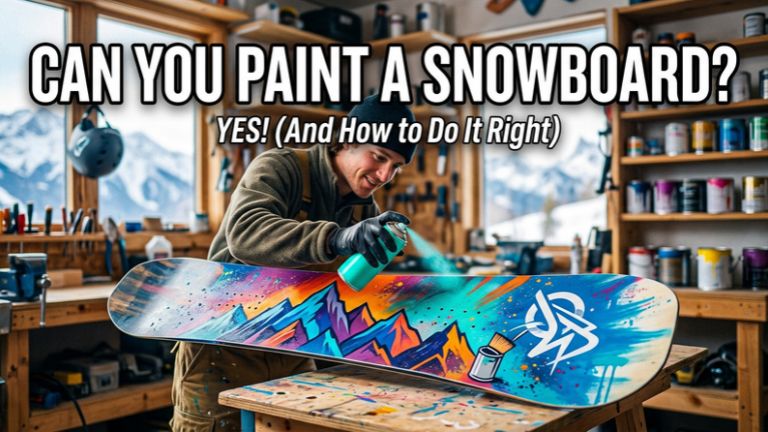
An old board with chipped graphics can feel like a lost cause. But with the right prep, it can become a custom piece of art. So can you paint a snowboard, and will the paint actually last on the snow? This guide covers the best paints, how to repaint a used snowboard, a step-by-step process, and the mistakes that ruin a board.
Short Answer: Yes, you can paint and repaint a snowboard. But paint only the top sheet. Never paint the base, edges, or sidewalls.
The Secret to Longevity: Standard paint peels fast under snow moisture and board flex. To make it last, sand the glossy top sheet, use a high-adhesion primer, and seal your artwork with a flexible, UV-resistant clear coat or epoxy layer.
Spray Paint Suitability: Yes, spray paint works very well when you use acrylic enamel or a plastic-bonding outdoor spray paint, applied in light, thin layers.
Can You Spray Paint a Snowboard?
Yes, and spray paint is often the easiest route. Here is why, and what to buy.
Why Spray Paint Works
Spray paint lays down an even, thin coat with no brush strokes. Thin coats stay flexible, which matters because a snowboard bends constantly. A good spray paint also handles cold temperatures better than thick brushed layers.
Best Paint Types
Two types of paint work best:
- Plastic-bonding acrylic spray enamel: Products such as Rust-Oleum Painter’s Touch or Krylon Fusion are made to stick to plastics. They are easy to find and simple to use.
- 2-part marine epoxy or polyurethane: These cure into a tough, flexible coat. They take more skill and care but can last longer.
Test any paint on a scrap piece or hidden corner first, since top sheet materials vary.
Paints to Avoid
Avoid oil-based house paints and rigid lacquers. They stay stiff when dry and crack when the board flexes.
Can You Repaint a Snowboard?
Yes. Repainting is a good way to revive a worn deck or create a one-of-a-kind design.
Repainting Used or Scratched Decks
Fix damage before you paint. Fill chips and deep gouges in the top sheet with epoxy or P-Tex fill. Let it cure, then sand it flush with the surrounding surface. Paint will not hide holes or ridges, so smooth them first.
Painting Over Existing Graphics
You do not need to strip the old graphic. Just scuff the clear coat with sandpaper. This creates a rough surface so the primer can grip, which is called mechanical adhesion.
Resale Value Impact
Painting lowers resale value in most cases. Buyers prefer stock graphics. A custom paint job is best for older decks, boards you plan to keep, or boards you want to hang on a wall.
Step-by-Step Guide: How to Paint a Snowboard Safely
Work outdoors or in a well-ventilated space. Wear a mask or respirator rated for paint fumes, especially with 2K clear coats, and follow all product safety instructions.
| Step | Action | Tools Needed | Critical Tip |
|---|---|---|---|
| Step 1: Disassemble and Mask | Remove bindings. Tape off the base, metal edges, sidewalls, and screw inserts. | Painter’s tape, razor blade | Never get paint on the base or steel edges. |
| Step 2: Sand and Prep | Scuff the glossy top sheet clear coat to create texture. Wipe clean. | 220 to 320 grit sandpaper, isopropyl alcohol | Do not sand down into the underlying fiberglass layers. |
| Step 3: Prime | Apply 1 to 2 thin coats of plastic or multi-surface primer. | Spray primer | Let dry fully for 2 to 4 hours. |
| Step 4: Paint and Artwork | Apply spray paint, stencils, or acrylic paint pens. | Spray paint, Posca pens | Keep layers thin to prevent runs and cracking. |
| Step 5: Clear Coat / Seal | Apply 3 to 4 coats of clear enamel or clear polyurethane sealant. | 2K clear coat or clear acrylic spray | Crucial for waterproofing and impact resistance. |
Let each coat dry as the label directs. Rushing the process is the most common cause of peeling. After the final coat, give the board the full cure time on the product label before you ride.
Critical Errors That Will Ruin Your Snowboard
A few mistakes cause most of the damage.
Painting the Base
Paint on a sintered or extruded base ruins wax absorption and glide. Your board will ride slow and sticky. Always mask the base completely.
Getting Paint in Binding Inserts
Paint inside insert threads stops binding screws from threading smoothly. It can also make bindings unsafe. Cover each insert with tape or a screw before painting, and clean any stray paint right away.
Ignoring Board Flex
Thick, heavy paint layers chip instantly during butter tricks and deep tail presses. Use thin coats and flexible clear coats. Several thin layers last longer than one thick layer.
Final Thoughts
So, can you paint a snowboard? Yes, as long as you paint only the top sheet and prep it well. Sand the glossy finish, prime, paint in thin layers, and seal with a flexible clear coat. Keep paint off the base, edges, and inserts.
If you want a design that is easy to undo, try a vinyl wrap instead. If you go with paint, take your time, work safely, and let every coat dry. The result can be a board that looks as unique as your riding.
If your board has severe core damage or delamination beyond a simple repaint, it might be time for a fresh deck. Check out our tested reviews in our complete guide to the best snowboards.
Frequently Asked Questions
Will painting a snowboard ruin the pop or flex?
No. Paint adds negligible weight and does not change the core flex structure, as long as you do not sand into the fiberglass.
How do you protect paint on a snowboard from chipping?
Use a 2K polyurethane clear coat. You can also add a clear stomp pad or vinyl wrap over high-wear foot areas.
Can you use vinyl wraps instead of painting a snowboard?
Yes. Custom vinyl top sheet wraps are a clean alternative. They can be peeled off without permanent changes to the board.