Snowboard jackets look tough, but what do they actually do? Are snowboard jackets waterproof, warm, and good enough to wear every day in winter? The short answer is yes to the first, and it depends on the jacket for the second. This guide breaks down ratings, insulation types, and what to look for before you buy.
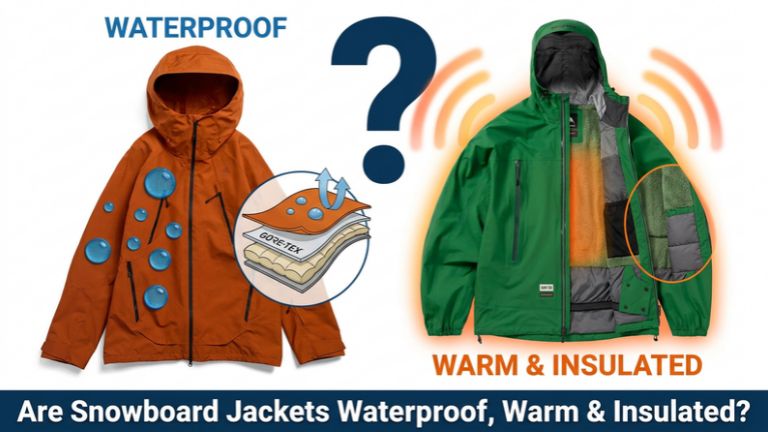
Short Answer: Yes, snowboard jackets are highly waterproof (typically 10,000mm to 30,000mm+). Whether they are warm and insulated depends on the jacket type.
Shell vs. Insulated: Shell jackets give maximum weatherproofing with zero insulation, so you need mid-layers. Insulated snowboard jackets add 40g to 100g of synthetic insulation for built-in warmth.
Winter Usability: They make excellent everyday winter coats thanks to superior windproofing, tough outer fabrics, and features like powder skirts and helmet-compatible hoods.
Are Snowboard Jackets Waterproof? (Understanding Ratings and Seams)
Yes, they are. But “waterproof” is not one single level. Three things decide how dry you stay: the fabric rating, the surface coating, and how the seams are sealed.
Waterproof Ratings Breakdown
Waterproofing is measured with a hydrostatic head rating in millimeters (mm). It shows how tall a column of water the fabric can hold before water leaks through.
- 10,000mm (10k): The resort standard. It handles normal snowfall, wet snow, and the occasional fall.
- 15,000mm: A strong all-rounder for wet climates and long days.
- 20,000mm and up, including GORE-TEX: Built for extreme conditions, heavy storms, and backcountry trips.
For most riders, 10k to 15k is plenty. If you ride in wet, heavy snow often, step up to 20k.
Breathability matters too. It is measured in grams of moisture vapor that pass through one square meter of fabric in 24 hours (g/m²/24hr). A good resort jacket sits around 10,000g or higher. A lower number can leave you damp from sweat, even if no water gets in from outside. Waterproof and breathable work as a pair.
DWR (Durable Water Repellent) Coatings
DWR is a thin coating on the outer fabric. It makes water bead up and roll off instead of soaking in. This keeps the jacket light and helps it breathe better.
DWR wears down over time. Dirt, friction, and washing all weaken it. When water stops beading, the jacket needs a wash and a fresh DWR treatment. The waterproof membrane underneath still works, but a soaked outer fabric feels cold and heavy.
Fully Taped vs. Critically Taped Seams
Every stitch leaves tiny needle holes. Melting snow can find them.
- Fully taped seams: Every seam is sealed with waterproof tape. This is the best protection.
- Critically taped seams: Only high-exposure seams, like the shoulders and hood, are sealed. This cuts cost but leaves a little risk.
If you ride in wet snow, choose fully taped seams.
Are Snowboard Jackets Warm and Insulated? (Shells vs. Insulated Jackets)
Waterproof does not mean warm. Warmth comes from insulation, and not every snowboard jacket has any. There are three main types.
Type 1: Insulated Snowboard Jackets
These have built-in synthetic insulation, often PrimaLoft or Thinsulate. Insulation weight is measured in grams.
- 40g: Light warmth for mild days.
- 60g to 80g: A solid middle ground for most winter days.
- 100g: Warm enough for freezing temperatures on its own.
Many insulated jackets use body-mapped insulation. That means thicker fill in the core and thinner fill in the arms, so you stay warm without losing movement. This is the easiest option if you want one jacket that does it all.
Type 2: Shell Jackets (Uninsulated 2-Layer and 3-Layer)
Shells are made only for waterproofing and wind blocking. They have no insulation at all.
- 2-layer shells bond the outer fabric to a membrane, with a loose liner inside.
- 3-layer shells bond the outer fabric, membrane, and inner fabric together. They are lighter, tougher, and more breathable.
You build your own warmth with a thermal base layer and a fleece or puffy mid-layer. Shells are great if you run hot, ride in changing weather, or want one jacket for all seasons.
Designed solely for weatherproofing and wind blocking, shell jackets feature zero built-in insulation and rely on your mid-layers for warmth. When choosing a shell, consider whether a 2-layer vs 3-layer GORE-TEX jacket better suits your needs. 2L shells offer a softer feel with an inner lining, while 3L shells deliver maximum durability and breathability for high-output riding.
Type 3: 3-in-1 System Jackets
A 3-in-1 jacket pairs a waterproof outer shell with a removable fleece or down liner. You can wear the liner alone, the shell alone, or both together. It is flexible and often good value, though the combined bulk can feel heavier than a purpose-built jacket.
How Much Insulation Do You Need?
Match the insulation to the weather you ride in most. These are rough starting points, since personal comfort varies.
- Above 30°F (-1°C): A shell with a light mid-layer, or a 40g jacket.
- 15°F to 30°F (-9°C to -1°C): A 60g to 80g insulated jacket, or a shell with a fleece.
- Below 15°F (-9°C): A 100g insulated jacket, or a shell with a thick puffy mid-layer.
If you run cold, move up one level. If you run hot, move down one. Layering is the easiest way to adjust through the day.
Snowboard Jacket Category Comparison
Here is how the main types compare with a standard casual winter coat.
| Feature / Metric | Insulated Snowboard Jacket | Shell Snowboard Jacket | Standard Casual Winter Coat |
|---|---|---|---|
| Waterproof Rating | High (10,000mm to 20,000mm) | Very High (20,000mm to 30,000mm+) | Low to Moderate (3,000mm to 5,000mm) |
| Built-in Warmth | High (synthetic insulation) | Low (requires layering) | High (heavy down or synthetic fill) |
| Wind Resistance | Excellent | Exceptional | Moderate |
| Breathability & Vents | Moderate (mesh pit zips) | Very High | Low to None |
| Fit & Coverage | Drop-tail back, room to move | Oversized for technical layers | Regular, tailored street cut |
The takeaway is simple. A casual coat may feel warm, but its 3,000mm to 5,000mm rating will not survive a wet day on the hill.
Are Snowboard Jackets Good for Winter?
For daily winter wear, yes. They often beat regular coats when the weather turns nasty.
Pros for General Winter Wear
- Unbeatable snow and rain protection
- High collars and wrist gaiters that block drafts
- Long drop-tail hems that keep your seat dry
- Tough outer fabric that handles bags, ice, and rough use
Cons to Keep in Mind
- Technical looks, such as bright colors and large logos
- Stiffer face fabrics than wool or cotton
- Longer, boxier cuts than a traditional peacoat
If you value style over performance, a tailored coat may suit the office better. For commutes, shoveling, and stormy weekends, a snowboard jacket is hard to beat.
Key Features to Look for When Buying for Winter
A few small details make a big difference in daily use.
- Pit zips: Underarm vents let you dump heat when you are walking, shoveling snow, or climbing stairs.
- Removable or snap-away powder skirts: Keep it on for deep snow. Take it off for a cleaner, casual look.
- Dual-adjust, helmet-compatible hoods: These cinch tightly around a beanie or helmet and stay put in the wind.
Also check for sealed pockets, a soft chin guard, and cuffs that fit over gloves.
Fit matters as well. You want room for a base layer and a mid-layer, but not so much that cold air pools inside. Raise your arms and twist your torso in the fitting room. The cuffs should not ride up past your wrists, and the hem should not lift above your waistband. Aim for a snug but flexible fit.
Finally, plan to care for the jacket. Wash it once or twice a season with a technical cleaner, not regular detergent, and refresh the DWR when water stops beading. A well cared for jacket can keep its waterproof performance for many seasons.
Final Thoughts
So, are snowboard jackets waterproof, warm, and insulated? They are almost always waterproof, with ratings from 10,000mm to 30,000mm+. Warmth depends on whether you pick an insulated jacket, a shell, or a 3-in-1.
Choose insulated for simple, built-in warmth. Choose a shell for flexibility and breathability. Whichever you pick, look for fully taped seams, a strong DWR finish, and the right insulation weight for your climate.
Now that you know what technical specs to look for, explore our tested recommendations in our complete buyer’s guide to the best snowboard jackets.
Frequently Asked Questions
Can you wear a snowboard jacket in rainy weather?
Yes. A 10k to 20k waterproof rating handles heavy rain better than many standard rain jackets. Pit zips also help you stay dry from sweat.
Why are some snowboard jackets so thin if they are expensive?
High-end GORE-TEX shells focus on light weight, breathability, and weatherproofing instead of heavy insulation. You pay for the technology and the membrane, then add warmth with layers.
Which is warmer: a down coat or an insulated snowboard jacket?
Down has a higher warmth-to-weight ratio in dry cold. But synthetic insulation, the kind used in snowboard jackets, keeps its warmth when it gets wet. In snowy, damp weather, synthetic often wins.