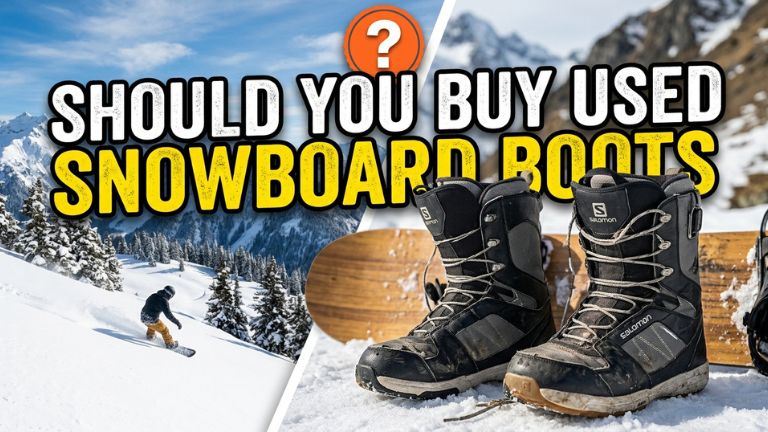
Boots are one of the pricier pieces of snowboard gear, which makes the used market genuinely tempting, especially for beginners or budget conscious riders. Should you buy used snowboard boots, or does the personal, foot specific nature of this particular item make secondhand a riskier bet compared to other used gear? This guide covers what to inspect carefully, how used boots stack up against new ones, and whether heat molding remains an option for a secondhand pair.
Buying Secondhand Snowboard Boots
Buying used snowboard boots can work out well, particularly for occasional riders or those just starting out who do not want to commit significant money before knowing how much they will actually ride. That said, boots are more personal and foot specific than many other pieces of gear, meaning the risk of ending up with a poor fit or already degraded materials is somewhat higher compared to buying used outerwear or accessories.
Success with used boots comes down almost entirely to careful inspection before purchase, since boots that look fine at a glance can hide significant wear that only becomes apparent once you are actually out riding in them.
Used Snowboard Boot Inspection Checklist
Working through these specific areas before buying helps you avoid ending up with boots that look acceptable but perform poorly.
Flex and Spine Stiffness
Check how the boot flexes when you bend it forward at the ankle, comparing the resistance to what you would expect from that specific model’s stated flex rating. Boots that have lost significant structural stiffness compared to their original flex rating often indicate material fatigue that a new owner cannot fully assess without knowing the boot’s original feel, making this a harder characteristic to judge for unfamiliar models but still worth checking for any obvious excessive softness or floppiness.
Lacing and BOA System Integrity
Test the tightening system fully, whether BOA, speed lace, or traditional laces, checking that it tightens smoothly and holds tension without slipping or failing partway through the range of motion. A BOA dial that grinds, sticks, or does not hold tension reliably signals a functional problem that would need repair or replacement before the boot could perform properly.
Liner Condition
Examine the liner for visible flattening, excessive compression, or areas where the padding has clearly lost volume compared to the rest of the liner. A significantly compressed liner reduces both warmth and support, and unlike some other wear issues, liner compression generally cannot be reversed through cleaning or minor repair.
Sole Tread and Binding Wear
Check the sole for excessive wear, particularly around the areas that contact binding highbacks and straps, since heavily worn contact points can affect how securely the boot locks into bindings during actual riding. Uneven wear patterns can also indicate the previous owner had a different stance or riding style that shaped the boot in ways that might not suit your own riding pattern as well.
Water Sealing and Stitching
Inspect seams and stitching throughout the boot for any visible separation, fraying, or gaps that could compromise waterproofing. Check the overall shell material as well for cracks or splits, particularly around high flex areas like the ankle, since these can allow water intrusion that a visual inspection alone might not immediately reveal if the boots are dry at the time of purchase.
New vs Used Snowboard Boot Breakdown
This table summarizes the general tradeoffs between buying new and buying used.
| Factor | New Boots | Used Boots |
|---|---|---|
| Cost | Full retail price | Often significantly less |
| Fit Certainty | Guaranteed accurate sizing | Depends on prior wear and stretch |
| Liner Condition | Full, uncompressed volume | Variable, needs inspection |
| Warranty | Typically included | Usually void or expired |
| Break-In Period | Required from scratch | May already be broken in favorably |
| Risk Level | Low | Moderate, depends on inspection |
This comparison highlights that used boots offer real savings, but that savings comes with added responsibility to inspect carefully before committing to a purchase.
Is It Bad to Buy Used Snowboard Boots?
Buying used is not inherently bad, but it does carry more risk compared to buying new, specifically because boots are so personal to each individual rider’s foot shape and because certain wear issues, like liner compression, are not always immediately obvious without careful inspection. For occasional riders or those on a tight budget, a carefully inspected pair of used boots in good condition can offer excellent value and a perfectly satisfactory riding experience.
For frequent riders, or those who have struggled with fit issues in the past and know they need very specific sizing or shape characteristics, buying new may be the safer choice, since a new boot guarantees full, uncompressed liner volume and a warranty that used boots typically lack. Weighing your own risk tolerance, budget, and how particular your feet tend to be about fit helps determine whether the potential savings from buying used are worth the added uncertainty involved.
How to Heat Mold Used Snowboard Boots
Heat molding remains possible with used boots in many cases, offering a way to improve fit even on a secondhand pair, though results can vary depending on how much the liner has already compressed from previous use. Take the boots to a specialty shop equipped with a proper boot heating oven, since attempting heat molding without the correct equipment risks damaging the liner material through uneven or excessive heat exposure.
Keep in mind that a liner already significantly compressed from a previous owner’s use may not respond to heat molding as effectively as a fresh, uncompressed liner would, since some of that original moldable volume may have already been permanently reduced through wear. If a used boot’s liner shows significant compression during your initial inspection, factor this reduced heat molding effectiveness into your decision, since it may mean settling for a less customized fit even after a proper molding attempt, compared to what a new boot’s fresh liner could achieve.
Where to Buy Used Snowboard Boots Safely
Where you source used boots from can meaningfully affect your risk level. Specialty snowboard shops that accept trade-ins or sell used gear often perform at least a basic inspection before reselling, and some even offer a short return window, providing more assurance than a purely peer to peer transaction. Online marketplaces and classified listings can offer lower prices but shift the entire inspection burden onto you, making detailed photos, honest seller descriptions, and direct questions about wear and fit history especially important before committing to a purchase sight unseen.
Buying from someone you know personally, such as a friend or fellow rider upgrading their own setup, can offer a useful middle ground, since you often have more insight into how the boots were actually used and cared for compared to an anonymous online listing.
Final Thoughts
Deciding whether you should buy used snowboard boots comes down to how thoroughly you inspect the specific pair in question and how much risk you are comfortable accepting in exchange for meaningful cost savings. Checking flex, lacing system function, liner condition, sole wear, and water sealing before committing to a purchase helps you avoid the most common pitfalls that come with buying secondhand footwear.
For many riders, especially those just starting out or riding only occasionally, a carefully vetted used pair offers excellent value. For those with more specific fit needs or frequent riding plans, the guaranteed condition and warranty that come with new boots may justify the higher upfront cost.