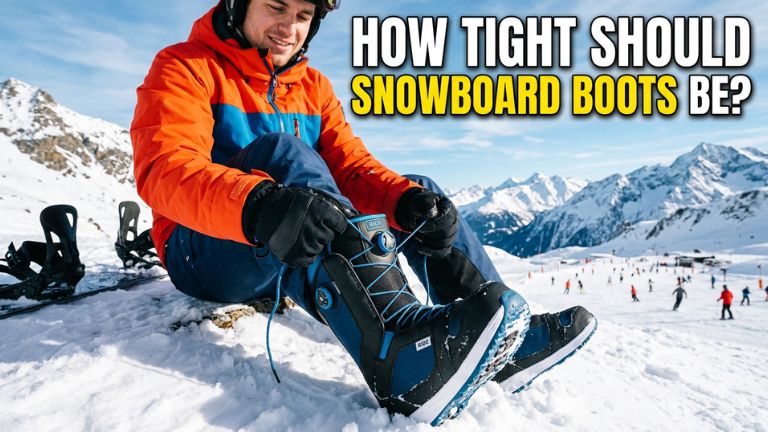
Boot fit trips up more riders than almost any other piece of gear, partly because the right fit for snowboarding feels noticeably different from a comfortable pair of everyday shoes. Understanding how tight snowboard boots should be helps you avoid both the numb, circulation cutting tightness some riders mistakenly chase and the sloppy looseness that reduces control and causes blisters.
This guide covers a quick fit check, the general tightness rule of thumb, how toes and heels should feel specifically, and how to tell new boot stiffness apart from a genuinely poor fit.
Snowboard Boot Fit Check
Before diving into specific tightness guidance, a quick overall check helps confirm you are in the right general size range. Put the boots on with the same socks you plan to actually ride in, lace or tighten them to a normal riding level, and stand up straight. Your toes should lightly touch the front of the boot in this standing position, without any of your weight shifted forward.
Next, flex forward into your normal riding stance, bending your knees and ankles as you would while actually snowboarding. Your toes should pull back slightly away from the front of the boot in this flexed position, since this shift is a key indicator that the boot is sized appropriately for actual riding rather than just casual standing.
How Tight Should Snowboard Boots Be?
Getting the overall tightness right involves balancing secure, responsive contact against genuine comfort and healthy circulation.
The Rule of Thumb
A commonly used guideline suggests your boots should feel snug all around, similar to a firm handshake rather than a painful squeeze. You should feel your foot held securely in place without significant internal movement, but you should not feel sharp pressure points, numbness, or a sensation of your foot being crushed. If you can easily wiggle your toes freely without restriction, the boot is likely too loose. If you feel throbbing or numbness within a few minutes of lacing up, the boot is likely too tight.
Toes
Your toes should have enough room to wiggle slightly, but they should also make light contact with the end of the boot when standing upright and pull back away from the end when flexed forward into a riding stance. This slight, natural contact when standing is expected and normal, not a sign of a boot that is too small, as long as it clearly relieves once you flex forward.
Heel
Your heel should stay firmly locked in place with minimal to no lift when you flex forward and back or shift your weight side to side. Heel lift, where your heel rises noticeably inside the boot during movement, often leads to blisters and reduced control, and is one of the more common fit problems worth paying close attention to during any fit check.
Should My Toes Touch the End of Snowboard Boots?
Yes, a small amount of toe contact with the front of the boot while standing upright in a neutral position is completely normal and often expected in a properly sized snowboard boot. This differs from typical everyday shoe fitting guidance, where any toe contact is usually considered a sign the shoe is too small.
The key difference comes down to riding stance. Once you flex forward into your actual riding position, bending at the knees and ankles, your toes should pull back away from the boot’s end, relieving that initial contact. If your toes remain jammed against the end of the boot even after flexing forward into a proper riding stance, that is a sign the boot is genuinely too small, rather than simply exhibiting the normal standing contact that is expected and fine.
Why New Boots Feel Tighter Than Used Ones
It is worth understanding that brand new snowboard boots almost always feel noticeably tighter and stiffer than a broken in pair, which can make properly sized new boots feel alarmingly snug at first. Boot liners, typically made from foam materials, compress and mold to your specific foot shape over repeated use, a process commonly referred to as breaking in.
This means a new boot that feels quite snug, even slightly uncomfortable in the first few wears, may actually settle into a perfect fit after several days of riding as the liner compresses and adapts to your foot. This is different from a boot that is genuinely too small, which will continue to cause pain or circulation problems even after a reasonable break in period rather than gradually improving. If discomfort persists significantly beyond the first several days of regular use, this points toward an actual sizing issue rather than simply needing more break in time.
How to Identify Too Tight vs Too Loose
Distinguishing between a boot that is too tight and one that is too loose helps you make the right adjustment rather than guessing randomly. Signs of a boot that is too tight include persistent numbness or tingling in the toes, sharp pain concentrated in specific pressure points, or a general throbbing sensation that develops within the first hour of wearing the boots. Circulation problems that do not improve even after loosening laces slightly are a particularly clear sign of a boot that is fundamentally too small rather than simply needing minor adjustment.
Signs of a boot that is too loose include your heel lifting noticeably during forward or backward flexing, your foot sliding side to side inside the boot during turns, or an overall sensation that your foot is not firmly connected to the boot’s structure despite the laces feeling reasonably tight. Excessive toe room, where your toes have significant space to move around freely even in a standing position, also suggests a boot that runs larger than ideal for your foot.
If you experience signs from both categories simultaneously, such as heel lift combined with toe pressure, this often points toward an incorrect boot shape or width for your specific foot rather than simply an incorrect overall size, which may require trying a different brand or model with a different last shape rather than simply adjusting within the same boot line.
Adjusting Fit Throughout the Day
Even a well fitted boot can benefit from small adjustments as your feet warm up or as socks and liners settle throughout a day of riding. Many riders find their boots feel slightly looser after the first hour or two, as foam liners compress further and feet adjust to the boot’s shape, making a mid-morning tightening check a worthwhile habit rather than assuming your initial lacing will hold perfectly all day.
Cold feet can also feel different from warm feet inside the same boot, sometimes leading riders to overtighten early in the day when their feet are still cold and slightly contracted, only to find the boots feel uncomfortably tight once feet warm up and swell slightly from activity. Checking and adjusting tension periodically throughout the day, rather than setting it once at the start and never revisiting it, helps maintain a consistently comfortable and secure fit despite these natural fluctuations.
Final Thoughts
Understanding how tight snowboard boots should be comes down to recognizing the difference between secure, supportive contact and genuinely restrictive tightness that causes numbness or pain. Checking toe contact in both standing and flexed positions, confirming your heel stays locked in place, and giving new boots a fair chance to break in before assuming a sizing problem all help you arrive at a fit that supports both comfort and real control on the mountain.
Taking the time to properly assess fit, rather than assuming pain is simply part of breaking in new gear, protects both your comfort and your riding performance throughout the season.