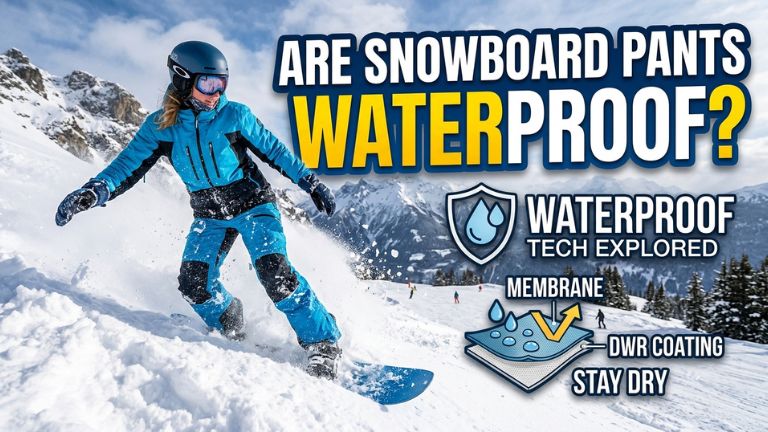
Standing at the bottom of a run with soaked through pants after a day of falls in wet snow raises an obvious question about whether your gear was ever truly waterproof to begin with. Are snowboard pants waterproof, or does that label mean something looser than it sounds?
Are Snowboard Pants Waterproof
Yes, true snowboard pants are waterproof, but the level of protection varies based on their hydrostatic head rating, measured in millimeters, or mm. This rating quantifies exactly how much water pressure the fabric can withstand before moisture begins to seep through, meaning not every pair labeled waterproof offers the same actual level of protection.
Understanding this rating system matters because two pairs of pants can both technically qualify as waterproof while performing very differently once you are sitting in wet snow or dealing with sustained, heavy precipitation.
Snowboard Pants Waterproof Rating
Hydrostatic head rating measures the height of a water column, in millimeters, that a fabric can support before water begins to penetrate. Higher numbers indicate stronger waterproofing performance.
5,000mm (5k)
Pants rated around 5,000mm offer entry-level waterproofing, generally adequate for light snow and short exposure to wet conditions. This rating suits occasional riders or milder, drier climates, but it can struggle during extended sitting in wet snow or sustained heavy precipitation.
10,000mm to 15,000mm (10k-15k)
This mid-range rating covers most recreational riders’ needs, providing solid protection against typical resort conditions including moderate snowfall, sitting breaks, and average fall frequency. Most all mountain oriented snowboard pants fall within this range, balancing genuine waterproof performance with reasonable cost.
20,000mm+ (20k-30k / GORE-TEX)
Pants rated 20,000mm or higher, often using GORE-TEX or similarly advanced membranes, deliver premium level waterproofing suited to backcountry use, extended exposure, or consistently wet, heavy snow climates. This tier commands a higher price but offers the strongest resistance to water penetration even under sustained pressure, such as prolonged sitting or kneeling in deep, wet snow.
Snowboard Pants Waterproofing and Breathability Matrix
This table compares typical waterproof and breathability ratings across common pant tiers, since both factors work together to determine real world comfort and performance.
| Waterproof Rating | Breathability Rating (g/m²/24hr) | Best Suited For |
|---|---|---|
| 5,000mm | 5,000g or less | Occasional riders, dry climates, short exposure |
| 10,000-15,000mm | 8,000-15,000g | Most recreational and all mountain riders |
| 20,000mm+ | 15,000-20,000g+ | Backcountry, wet climates, extended exposure |
Breathability rating measures how many grams of moisture vapor can pass through one square meter of fabric over 24 hours, meaning higher numbers indicate a fabric that manages internal sweat and condensation more effectively during active riding.
Critical Features That Keep Water Out (Beyond the Fabric)
Fabric rating alone does not guarantee dry pants, since construction details play an equally important role in actual water resistance.
Fully Taped Seams vs Critically Taped Seams
Fully taped seams cover every stitched seam throughout the entire pant with waterproof tape, sealing every potential entry point where water could otherwise seep through needle holes. Critically taped seams cover only the most vulnerable, high exposure areas, leaving other seams untaped and representing a cost saving measure that still leaves some water penetration risk in less critical, but not entirely dry, areas of the pant.
DWR (Durable Water Repellent) Coating
The DWR coating applied to the outer fabric surface causes water to bead up and roll off rather than soak into the fabric itself. This coating wears down gradually with use and washing, meaning even a pair of pants with an excellent hydrostatic head rating can start absorbing surface moisture and feeling damp once the DWR coating has significantly degraded, even though the underlying waterproof membrane continues functioning correctly underneath.
Boot Gaiters and Jacket-to-Pant Interfaces
An internal boot gaiter, typically hooking onto your boot laces, keeps snow from working its way up the pant leg and into your boot during falls or deep snow riding. Similarly, a proper jacket-to-pant interface, sometimes using a zip connection or an elastic powder skirt overlap, prevents snow from sneaking in at the waist during falls, an entry point that fabric waterproofing alone cannot address.
Why Do Snowboard Pants Lose Waterproofing Over Time?
Waterproofing degrades gradually through a combination of factors related to both wear and improper care. The DWR coating wears down through friction, dirt buildup, and repeated washing, particularly if washed with regular detergent or dried using high heat, both of which can strip or damage this outer coating faster than normal use alone.
The underlying waterproof membrane itself can also degrade over years of use, especially with repeated exposure to body oils, sweat, and dirt that gradually clog the microscopic pores responsible for both waterproofing and breathability. Seams can develop small gaps as the waterproof tape ages and loses adhesion, particularly at high flex points like the knees, creating small but real entry points for water even in pants that were fully sealed when new.
How to Waterproof Snowboard Pants
Restoring lost waterproofing starts with proper cleaning using a technical gear wash rather than regular detergent, which can leave residue that reduces breathability and interferes with reapplied treatments. Once clean and fully dry, apply a dedicated waterproofing spray or wash-in treatment specifically designed to restore the DWR coating, following the product’s specific instructions for application and any recommended heat activation step.
For pants showing seam issues rather than simple DWR wear, seam sealant products designed for outdoor gear can address small gaps at aging seams, though significant seam tape failure across multiple areas often signals it is time to consider replacement rather than repeated repair. Reapplying waterproofing treatment once or twice per season, even before obvious performance decline, helps maintain consistent protection rather than waiting until pants have already started soaking through.
Gore-Tex Snowboard Pants
GORE-TEX represents one of the most recognized premium waterproof membrane technologies, commonly rated at 28,000mm or higher, well into the premium tier covered earlier in this guide. This membrane uses an extremely fine, microporous structure that blocks liquid water while still allowing water vapor from sweat to pass through, delivering both strong waterproofing and solid breathability simultaneously.
GORE-TEX pants typically cost more than pants using a brand’s proprietary membrane technology at a similar waterproof rating, reflecting the licensing and quality control standards required to carry the GORE-TEX name. For riders spending significant time in backcountry terrain, wet coastal climates, or simply wanting the most reliable, well tested waterproofing option available, GORE-TEX pants represent a dependable, if pricier, choice within the broader snowboard pant market.
Final Thoughts
Are snowboard pants waterproof? Genuinely yes, when built with a proper waterproof membrane and construction, but the actual level of protection varies significantly based on hydrostatic head rating, seam taping quality, and DWR coating condition. Understanding these specific factors, rather than assuming all pants labeled waterproof perform identically, helps you choose and maintain pants that actually keep you dry in your typical riding conditions.
Taking care of your pants through proper washing and periodic waterproofing treatment protects your investment and keeps that waterproof rating performing close to its original specification for many seasons rather than degrading unnoticed until you are already soaked through on the mountain.