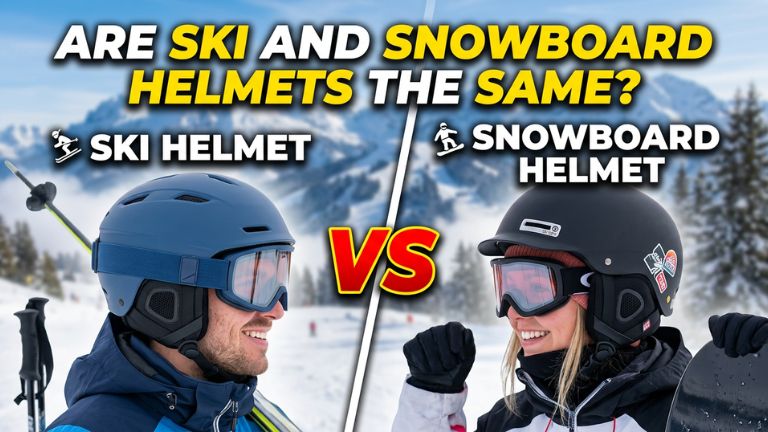
Walking through the helmet section of a gear shop, you will notice the products are rarely split into separate ski and snowboard categories the way pants and boots often are. Are ski and snowboard helmets the same, or is there a meaningful difference hiding beneath the surface? This guide breaks down the safety standards, actual differences, and whether it really matters which one you choose.
Are Ski and Snowboard Helmets the Same
In most practical respects, yes, ski and snowboard helmets are functionally the same product. Both are designed to protect against the same types of impacts common in snow sports, and the vast majority of helmets sold today are marketed generically for both activities rather than split into separate ski specific and snowboard specific lines.
Any differences that do exist tend to be minor, related more to style preferences and small design details than any fundamental difference in protection or construction. For the average rider or skier, a helmet labeled for one sport works perfectly well for the other.
Shared Safety Standards: Why Protection Is Identical
The core reason ski and snowboard helmets overlap so closely comes down to shared safety certification standards. In the United States, most snow sport helmets are certified to meet ASTM F2040 standards, a testing protocol specifically developed for helmets used in skiing and snowboarding. This certification does not distinguish between the two sports, since the type of impact protection needed, primarily against falls and collisions at moderate speeds, remains essentially identical between skiing and snowboarding.
European markets often reference the EN 1077 standard, which similarly applies broadly across both sports without separate certification tracks. Because both activities involve similar risks, primarily falls onto snow or ice and occasional collisions with other people or fixed objects, helmet manufacturers have little reason to engineer fundamentally different protective structures for one sport versus the other.
This shared standard is precisely why you will rarely see a helmet marketed as strictly ski only or snowboard only when it comes to actual impact protection. The certification a helmet carries applies equally to both activities, giving riders and skiers alike confidence that a properly certified helmet offers appropriate protection regardless of which sport they practice.
Difference Between Ski and Snowboard Helmets
While the core safety technology remains essentially identical, a few minor differences occasionally show up between helmets marketed toward one sport or the other. Some snowboard oriented helmets lean toward a slightly different aesthetic, often featuring styling closer to skate or streetwear influenced graphics, reflecting snowboarding’s cultural roots. Ski oriented helmets sometimes lean toward a more streamlined, race inspired look.
Fit profile can occasionally differ very slightly as well, since some brands design certain helmet models with a shape intended to pair more comfortably with goggles favored by one sport’s typical style, though this overlaps heavily and is far from a strict rule. Ventilation configurations sometimes differ subtly too, with some ski focused helmets emphasizing airflow for higher speed descents, while some snowboard focused models balance ventilation with warmth retention for the more varied pace typical of snowboarding, including extended time on lifts or waiting around the terrain park.
These differences remain fairly minor overall, and a great many helmets on the market today are simply marketed as snow sport helmets without any sport specific branding at all, reflecting just how much overlap genuinely exists between the two categories.
Can You Wear a Ski Helmet for Snowboarding
Yes, wearing a ski helmet for snowboarding is entirely safe and common practice. Since both types meet the same core safety certifications, there is no meaningful protective disadvantage to using a ski marketed helmet while snowboarding, or vice versa. Many riders and skiers within the same family or friend group even share helmets interchangeably without any safety concerns.
The main consideration when using a ski helmet for snowboarding, or the reverse, comes down to personal style preference and how well the helmet pairs comfortably with your chosen goggles, rather than any actual difference in protective capability. If the fit feels comfortable and the helmet carries proper certification, the sport specific marketing label on the box makes little practical difference to your actual safety on the mountain.
What Actually Matters When Choosing a Helmet
Since sport specific labeling matters so little in practice, focusing on other factors leads to a better purchasing decision. Proper fit remains the single most important factor, since even a well certified helmet cannot protect effectively if it does not sit snugly and securely on your head. Trying helmets on in person, checking for a snug fit without excessive pressure points, offers the most reliable way to confirm proper sizing.
Certification itself matters more than sport specific branding, so checking for ASTM F2040 or EN 1077 certification, depending on your region, ensures the helmet meets recognized safety standards regardless of how it happens to be marketed. Ventilation adjustability, goggle compatibility, and additional features like built in audio compatibility or MIPS technology, which helps reduce rotational impact forces, are all worth considering based on personal preference rather than which sport the helmet happens to be marketed toward.
When Replacement Matters More Than Sport Labeling
Regardless of whether a helmet is marketed for skiing or snowboarding, replacement timing matters far more for actual safety than which sport label appears on the box. Helmets should generally be replaced after any significant impact, since the protective foam inside is often designed to absorb a single major impact effectively, after which its protective capability can be compromised even without visible external damage.
Manufacturers also generally recommend replacing helmets every five years or so, even without a specific impact event, since materials can degrade gradually over time from temperature changes, UV exposure, and general wear. This replacement guidance applies equally to ski and snowboard marketed helmets, reinforcing just how similar the two categories really are once you look past surface level branding and style choices.
Multi-Sport Households and Shared Gear
For families or friend groups where some members ski and others snowboard, this overlap in helmet standards is genuinely convenient. A single helmet can move between activities without any need to purchase separate sport specific gear, as long as the fit works reasonably well for whoever is wearing it that day.
This shared compatibility also makes helmets a practical option for rental shops and resorts, since a single inventory of certified helmets can serve both skiers and snowboarders without needing to stock and track separate sport specific categories. It is one more small piece of evidence pointing toward just how interchangeable these two categories of gear really are once actual safety and construction are the focus rather than marketing.
Final Thoughts
So, are ski and snowboard helmets the same? For all practical safety purposes, yes. Both are built and certified to the same core standards, and any differences that exist come down to minor style and ventilation preferences rather than any meaningful difference in actual protection. Choosing a helmet based on proper fit, certification, and personal comfort matters far more than whether the label on the box says ski, snowboard, or simply snow sports.
Whichever sport brings you to the mountain, a properly fitted, certified helmet keeps you protected either way, letting you focus on the ride rather than worrying about which category your gear technically falls under.