Cold feet on the mountain lead a lot of riders to reach for an extra pair of socks, assuming more layers automatically means more warmth. It seems logical at first, but layering socks the wrong way can actually make your feet colder rather than warmer. Knowing how to layer socks for snowboarding the right way, or knowing when to skip layering entirely, makes a real difference in comfort throughout the day.
This guide covers what actually works when it comes to sock layering, common mistakes riders make, and better alternatives if you are still struggling with cold feet.
Why Riders Try Layering Socks in the First Place
The instinct to double up on socks usually comes from a genuine problem. Cold feet are one of the most common complaints among snowboarders, especially on frigid mornings or long chairlift rides. Adding another layer feels like the obvious fix, similar to adding another jacket layer on your upper body.
The issue is that feet inside a boot behave very differently than the rest of your body inside loose fitting clothing. Boots are a snug, enclosed space, and adding bulk in that environment does not work the same way as layering a jacket over a shirt.
Why Doubling Up on Socks Usually Backfires
Wearing two pairs of socks inside a snowboard boot typically compresses circulation in the foot. Boots are designed to fit snugly around a single, properly sized sock. Adding a second pair takes up extra space, which forces tighter compression around your foot once the boot is buckled down.
Reduced circulation means less warm blood reaching your toes, which are already the coldest part of your foot in cold conditions. Ironically, this often leaves feet colder with two pairs of socks than with a single, well chosen pair.
When Layering Socks Might Actually Work
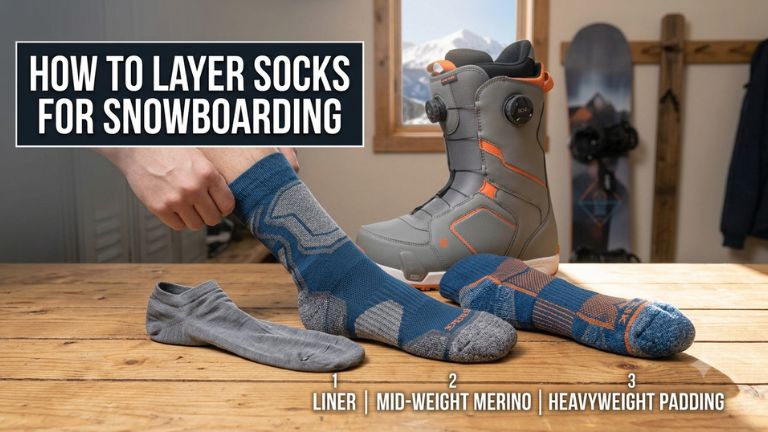
There are a few limited situations where a light layering approach can work without backfiring, though it requires care. Wearing an extremely thin liner sock underneath a slightly thicker outer sock, rather than two regular sock pairs, can work if your boots have enough room to accommodate it without excessive compression.
This approach works best for riders with slightly looser fitting boots or those specifically sized with a bit of extra volume. If your boots already fit snugly with a single sock, adding any kind of second layer is likely to cause more harm than good.
How to Layer Socks for Snowboarding Without Restricting Circulation
If you do want to try layering, doing it correctly matters a lot. Choose an extremely thin, moisture wicking liner sock as your base layer rather than a standard thickness sock. This liner should sit smooth against your skin without any bunching, since wrinkles under a second layer create pressure points that get worse once compressed inside a boot.
Your outer sock should still be a proper snowboarding sock designed for boot use, ideally on the thinner side to avoid excessive bulk when combined with the liner underneath. Check your boot fit carefully with both layers in place before heading out, since a boot that felt fine with one sock can feel dramatically different once a second thin layer is added.
Better Alternatives to Layering
For most riders dealing with cold feet, a better solution exists than doubling up on socks. Switching to a single, high quality snowboarding sock made from merino wool or a technical blend often solves the problem more effectively than adding bulk. These materials regulate temperature and manage moisture far better than a basic athletic sock, addressing the root cause of cold feet rather than just adding more fabric.
Boot heaters or heated insoles offer another solution for riders who consistently struggle with cold feet regardless of sock choice. These provide active warmth rather than relying purely on insulation, which can make a bigger difference on especially cold days.
Checking boot fit itself is also worth considering. Boots that are too tight restrict circulation on their own, regardless of sock choice, while boots that are too loose let cold air move around more freely inside. Sometimes the sock is not the actual problem at all.
The Role of Boot Fit in Cold Feet
Sock choice only solves part of the cold feet equation. Boot fit plays an equally important role, and no amount of sock layering will fix a fundamentally poor fitting boot. Boots that are too small compress circulation regardless of what socks you wear, while boots that are too large allow excess cold air to circulate around your foot no matter how many layers you add.
If cold feet remain a persistent problem even after trying different sock combinations, it may be worth having your boot fit reevaluated by a professional bootfitter rather than continuing to experiment with sock layering alone.
Foot Warmers as an Alternative to Extra Socks
Disposable or rechargeable toe warmers offer a more effective solution than layering socks for riders who need extra warmth on particularly cold days. These sit against the top of the foot or toes and provide direct heat without adding the bulk that a second sock layer introduces.
Unlike an extra sock, toe warmers do not compress circulation, since they are thin enough to fit inside a properly sized boot without significantly altering the fit. Many riders find this a more reliable solution for genuinely cold days compared to any sock layering strategy.
Circulation Tips Beyond Sock Choice
A few habits beyond sock and boot choice can help improve circulation and warmth throughout the day. Making sure boot buckles are not overtightened helps blood flow reach the toes more effectively, since excessive tightness restricts circulation regardless of sock setup.
Wiggling your toes periodically during chairlift rides also helps keep blood moving, especially on longer lift rides where feet can start to feel cold from inactivity. Staying properly hydrated and fueled throughout the day supports circulation as well, since the body prioritizes blood flow to core organs over extremities when energy reserves run low.
Signs Your Sock Strategy Needs Adjusting
If your feet are consistently cold despite trying different approaches, a few signs can help identify the actual issue. Numbness or tingling points toward restricted circulation, often from boots that are too tight or socks that are too thick or layered. Cold feet that never seem to warm up, even with good insulation, more often point toward a moisture problem rather than an insulation problem, suggesting a switch to better moisture wicking material is worth trying before adding more layers.
Choosing the Right Sock Thickness Instead of Layering
Rather than reaching for a second pair, many riders find better results simply choosing a thicker single sock built for cold weather riding. Snowboarding socks typically come in a range of thicknesses, and a heavier weight option designed for cold days can provide the warmth riders are looking for without the circulation problems that come from stacking two pairs together.
This approach keeps the boot fit consistent with what the manufacturer intended, since boots are generally sized and shaped around a single sock of moderate thickness. Switching to a heavier single sock for particularly cold days, then back to a lighter pair once temperatures rise, offers more flexibility than committing to a layered setup for the entire season.
Final Thoughts
Learning how to layer socks for snowboarding really comes down to understanding when layering helps and when it works against you. In most cases, a single high quality sock made from the right material outperforms two pairs stacked together, since doubling up tends to restrict circulation rather than add meaningful warmth.
If cold feet remain a problem, look beyond sock layering toward better materials, proper boot fit, or active heating solutions like toe warmers. Addressing the root cause works far better than simply adding more fabric inside an already snug boot.