Standing in the gear shop, it is easy to wonder if snowboarding socks are really worth the extra cost compared to a regular pair of athletic socks sitting in your dresser at home. Do snowboarding socks make a difference, or is it just clever marketing aimed at riders who already spend enough on boots, boards, and outerwear?
The short answer is yes, snowboarding socks genuinely make a difference, and this article explains exactly why, along with what happens when you skip them in favor of regular socks.
What Makes Snowboarding Socks Different
Regular socks, especially cotton ones, are built for everyday comfort rather than performance in cold, demanding conditions. Snowboarding socks are engineered specifically for the inside of a stiff, insulated boot, where moisture management, cushioning, and a snug fit all matter far more than they do in a sneaker or casual shoe.
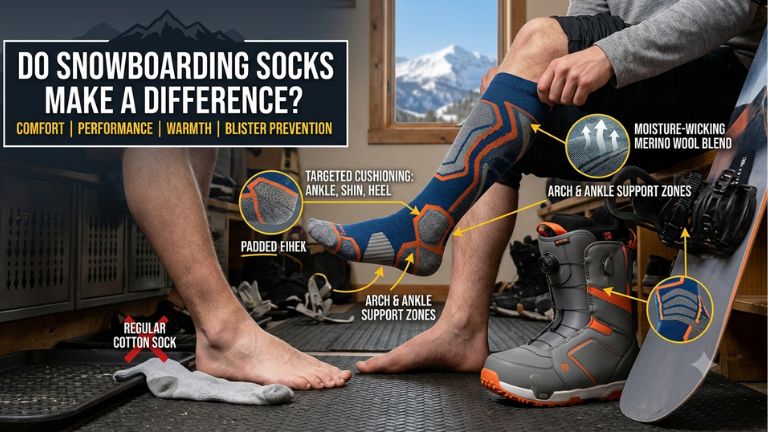
Most snowboarding socks use merino wool or technical synthetic blends instead of cotton. These materials pull sweat away from the skin instead of holding onto it, which keeps feet drier and warmer throughout a full day of riding.
Do Snowboarding Socks Make a Difference for Warmth
One of the biggest reasons riders switch to dedicated snowboarding socks is warmth. Cotton socks absorb sweat and hold it against the skin, and once that moisture sits there, it actually pulls heat away from your feet through evaporation, leaving them colder rather than warmer.
Merino wool, commonly used in snowboarding socks, works differently. It naturally regulates temperature and continues to insulate even when slightly damp, something cotton simply cannot do. This is one of the clearest examples of how the right sock can directly impact comfort on a cold chairlift ride or a long day exploring the mountain.
Moisture Management and Foot Comfort
Feet sweat more than people realize, even in freezing temperatures, especially inside an insulated boot working hard to keep the rest of your foot warm. Socks designed for moisture wicking pull that sweat away from the skin and move it toward the outer layer of fabric, where it can evaporate more easily.
Regular cotton socks do the opposite, trapping moisture close to the skin. Over the course of a full day, this leads to that unpleasant cold, clammy feeling that ruins comfort and can even contribute to blisters from prolonged dampness rubbing against the skin.
Fit and Boot Performance
Beyond warmth and moisture, sock choice actually affects how your boots perform. Snowboarding socks are designed to fit snugly without bunching, which matters a great deal inside a boot where excess fabric can create pressure points or throw off the overall fit you worked hard to dial in.
Bulky or bunched up regular socks can make an otherwise well fitted boot feel uncomfortable or unevenly tight in certain spots. A properly designed snowboarding sock, by contrast, works with your boot’s fit rather than against it, helping maintain the responsiveness and control that a good boot fit provides.
Cushioning Where It Counts
Many snowboarding socks include targeted cushioning in the heel, shin, and arch areas, spots that take on repeated impact and pressure throughout a day of riding. This padding helps absorb shock and reduces fatigue, something a thin, flat regular sock simply does not offer.
Over a full day, that extra cushioning adds up, especially for riders who spend hours on their feet moving between runs, hiking to different spots, or dealing with long lift lines.
Odor Resistance Over Multiple Days
Anyone who has traveled for a multi day trip knows the value of socks that do not develop a strong odor after just one wear. Merino wool used in most quality snowboarding socks naturally resists bacteria growth, which keeps smell manageable even across several days of riding without a wash in between.
Regular cotton socks tend to develop odor much faster, since bacteria thrive in the trapped moisture that cotton fails to wick away. For riders on longer trips without easy access to laundry, this difference becomes very noticeable by day two or three.
What Happens If You Skip Dedicated Socks
Riders who stick with regular athletic or cotton socks instead of investing in proper snowboarding socks often notice a handful of recurring problems. Cold, damp feet by midday are one of the most common complaints, along with an increased risk of blisters from moisture buildup rubbing against the skin over several hours.
Boot fit can also suffer, since regular socks are not designed with the same snug, low profile construction that prevents bunching inside a boot’s tight, insulated interior. None of these issues are guaranteed to happen every single time, but the risk goes up significantly compared to wearing socks actually designed for the sport.
Are Expensive Socks Worth It
Given how noticeably socks affect performance and comfort, many riders wonder if it makes sense to spend more on a premium pair. Higher quality snowboarding socks, particularly those made from merino wool blends, tend to last longer and perform better across multiple seasons compared to cheaper synthetic alternatives.
That said, you do not necessarily need the most expensive option on the market to see real benefits. Even a mid range pair specifically designed for snowboarding will outperform a regular athletic sock in nearly every meaningful way, from warmth to moisture control to fit.
Real World Impact on a Day of Riding
Consider a typical day on the mountain. Morning temperatures are often the coldest part of the day, and this is exactly when cold feet become most noticeable if your sock choice is not up to the task. As the day goes on and your body warms up from activity, moisture management becomes the bigger factor, determining whether your feet stay comfortable or start feeling damp and cold again by early afternoon.
A well designed snowboarding sock addresses both of these challenges throughout the entire day, while a regular sock tends to fall short on one or both fronts as conditions and activity levels change.
Comparing Snowboarding Socks to Ski Socks
It is worth noting that snowboarding socks and ski socks often overlap quite a bit in design, since both are built for similar conditions inside insulated winter boots. Some brands market socks specifically for snowboarding with slightly different cushioning placement, accounting for the different stance and boot flex found in snowboard boots compared to rigid ski boots.
The core technology, including moisture wicking fibers and merino wool blends, tends to be shared across both categories. If you already own a solid pair of ski socks, they will likely perform reasonably well for snowboarding too, though socks marketed specifically for snowboarding are often optimized for the particular pressure points found in snowboard boots.
Listening to Rider Feedback
Ask any experienced rider about their sock choice, and most will have a strong opinion backed by firsthand experience. Many long time snowboarders can point to a specific trip where the wrong socks led to miserable, cold feet, often after switching from a trusted pair to something cheaper or less suited for the conditions.
This kind of real world feedback echoes what the materials and design differences suggest on paper. Riders consistently report warmer, drier feet after switching to dedicated snowboarding socks, particularly on colder days or longer trips where the cumulative effect of moisture and temperature regulation becomes most apparent.
Final Thoughts
So, do snowboarding socks make a difference? Based on how they manage moisture, regulate temperature, and support a proper boot fit, the answer is clearly yes. The difference becomes especially noticeable on longer days, colder mornings, or multi day trips where comfort and performance really matter.
Investing in a solid pair of snowboarding socks is a relatively small upgrade compared to the rest of your gear setup, but it pays off in warmer, drier, and more comfortable feet every time you head out for a day on the mountain.