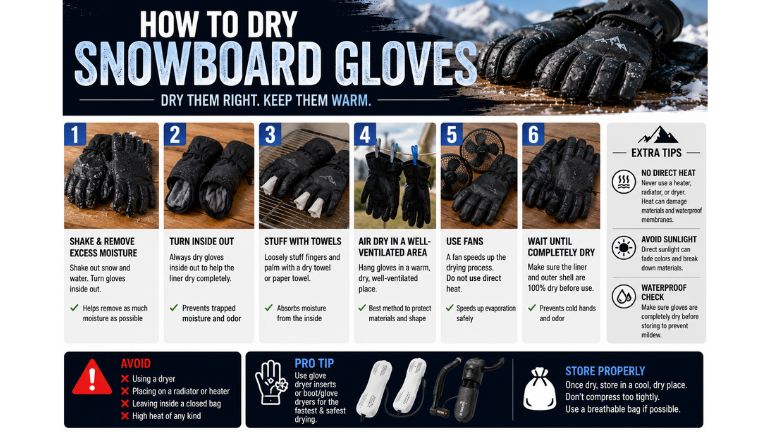
Wet gloves at the end of a riding day are almost unavoidable. Snow melts against your palms, sweat builds up inside, and by the time you get back to the car or the lodge, your gloves are soaked through. What you do next matters a lot. Drying them the wrong way can wreck the waterproofing and insulation just as easily as a bad wash.
This guide walks through how to dry snowboard gloves properly, along with a few tricks to speed up the process without damaging the materials inside.
Why Drying Matters as Much as Washing
Most riders focus on washing their gloves carefully but rush through drying without much thought. That is a mistake. Heat is one of the fastest ways to damage the waterproof membrane and insulation inside a quality pair of snowboard gloves.
Tossing damp gloves on a radiator or shoving them near a campfire might dry them quickly, but the intense heat breaks down the waterproof coating and can even warp leather panels. Once that damage happens, it usually cannot be undone, leaving you with gloves that soak through much faster on your next trip out.
Start by Removing Excess Moisture
Before you even think about drying, get rid of as much water as possible right away. Gently press the gloves between a clean towel to absorb extra moisture. Avoid wringing or twisting them, since this can distort the shape and stress the seams.
If your gloves have a removable liner, take it out and dry it separately. Liners often hold onto more moisture than the outer shell and dry faster when separated, which also helps air reach the inner lining of the outer glove more effectively.
The Towel Stuffing Method
One of the most effective ways to dry snowboard gloves is also one of the simplest. Stuff each glove loosely with a clean, dry towel or a few sheets of paper towel. This absorbs moisture from the inside out and helps the gloves hold their natural shape while drying.
Check the stuffing periodically and swap it out once it becomes damp. Replacing wet stuffing with dry material speeds up the process significantly compared to leaving gloves to dry on their own without any help.
Choosing the Right Drying Spot
Where you place your gloves to dry matters almost as much as the method itself. Look for a spot with good airflow, away from any direct heat source. A room with a ceiling fan or near an open window works well, as does simply leaving them out in a dry, well ventilated space overnight.
Avoid direct sunlight as well. While it might seem harmless, prolonged sun exposure can fade colors and degrade certain fabric coatings over time, especially with repeated exposure across a full season of riding.
What to Avoid When Drying Gloves
A few common habits can do serious damage to snowboard gloves, even when riders think they are helping the process along. Never place gloves directly on or near a radiator, space heater, or wood stove. The intense, direct heat breaks down waterproof membranes almost immediately and can even melt certain synthetic materials.
Skip the clothes dryer entirely unless the care label specifically states it is safe. Most snowboard gloves are not designed to handle the tumbling and heat of a standard dryer cycle, and the risk of damage is high. Blow dryers on a hot setting held close to the glove cause similar problems, even if it feels like a quick fix in the moment.
Using a Boot and Glove Dryer
For riders who hit the mountain often, investing in a dedicated boot and glove dryer can make a big difference. These devices use gentle, low level warmth and airflow to dry gear overnight without the risk of high heat damage.
Most models work by inserting small forms into each glove that blow warm air through the fabric, pulling moisture out evenly. This method is far gentler than a space heater or dryer, and it means dry gloves are ready to go every single morning without any guesswork involved.
Speeding Up Drying Time Naturally
If you do not have a dedicated dryer, a few natural methods can still speed things along safely. Placing a small fan nearby to increase airflow around the gloves helps moisture evaporate faster without adding any heat at all. Turning the gloves periodically so different areas face the airflow directly also helps them dry more evenly.
Hanging gloves by the cuff with clips, rather than laying them flat, allows air to circulate around the entire glove rather than just the top surface. This small adjustment can shave meaningful time off the total drying process.
How Long Does It Take to Dry Snowboard Gloves
Drying time varies quite a bit depending on the glove’s insulation, thickness, and how wet they got in the first place. A lightly damp pair might dry in as little as six to eight hours with good airflow. Fully soaked gloves with heavy insulation can take twenty four to forty eight hours to dry completely using natural air drying methods alone.
This is exactly why many riders who hit the slopes multiple days in a row keep a backup pair of gloves in their bag. Waiting for a soaked pair to fully dry overnight is not always realistic, especially with thicker, heavily insulated styles.
Signs Your Gloves Are Fully Dry
It can be tempting to grab your gloves and head out the door once the outer surface feels dry, but the inside can still hold moisture even when the exterior feels fine. Check the fingertips and seams carefully, since these areas often stay damp longer than the rest of the glove.
If you removed a liner for separate drying, make sure both the liner and outer shell are completely dry before reassembling them. Trapping any leftover moisture between layers can lead to a musty smell developing over time, even if the gloves technically feel dry to the touch.
Preventing Gloves From Getting Too Wet in the First Place
While you cannot avoid moisture entirely, a few habits reduce how soaked your gloves get during a day of riding. Reapplying waterproofing spray at the start of the season, and again partway through if needed, helps water bead off rather than soak in. Brushing off snow before it has a chance to melt into the fabric also helps keep gloves drier throughout the day.
Taking a short break to air out gloves during a long day, even just for a few minutes at the lodge, can prevent them from becoming fully saturated by the time you are ready to head home.
Drying Gloves While Traveling
Drying gear properly gets trickier when you are away from home, staying in a hotel room or a rental cabin without the setup you have at home. In these situations, a few adjustments still make a real difference. Ask if the room has a fan, or bring a small portable one, since even modest airflow speeds up drying compared to a still room.
Hanging gloves near a window that gets fresh air, rather than sealing them inside a closet or gear bag, also helps prevent that trapped, musty smell from developing overnight. If you are on a multi day trip, packing a spare pair of gloves means you are never stuck waiting on a soaked pair to dry before the next morning’s first run.
Final Thoughts
Drying snowboard gloves properly protects the same waterproofing and insulation that keeps your hands warm on the mountain. Skip the heater and dryer, stick to the towel stuffing method or a dedicated glove dryer, and give your gloves enough time in a well ventilated space to dry completely.
A little patience with the drying process now means warmer, more comfortable hands on every future trip up the mountain.